South Palm Canyon Low Water Bridge - Project History, Overview, & Current Status

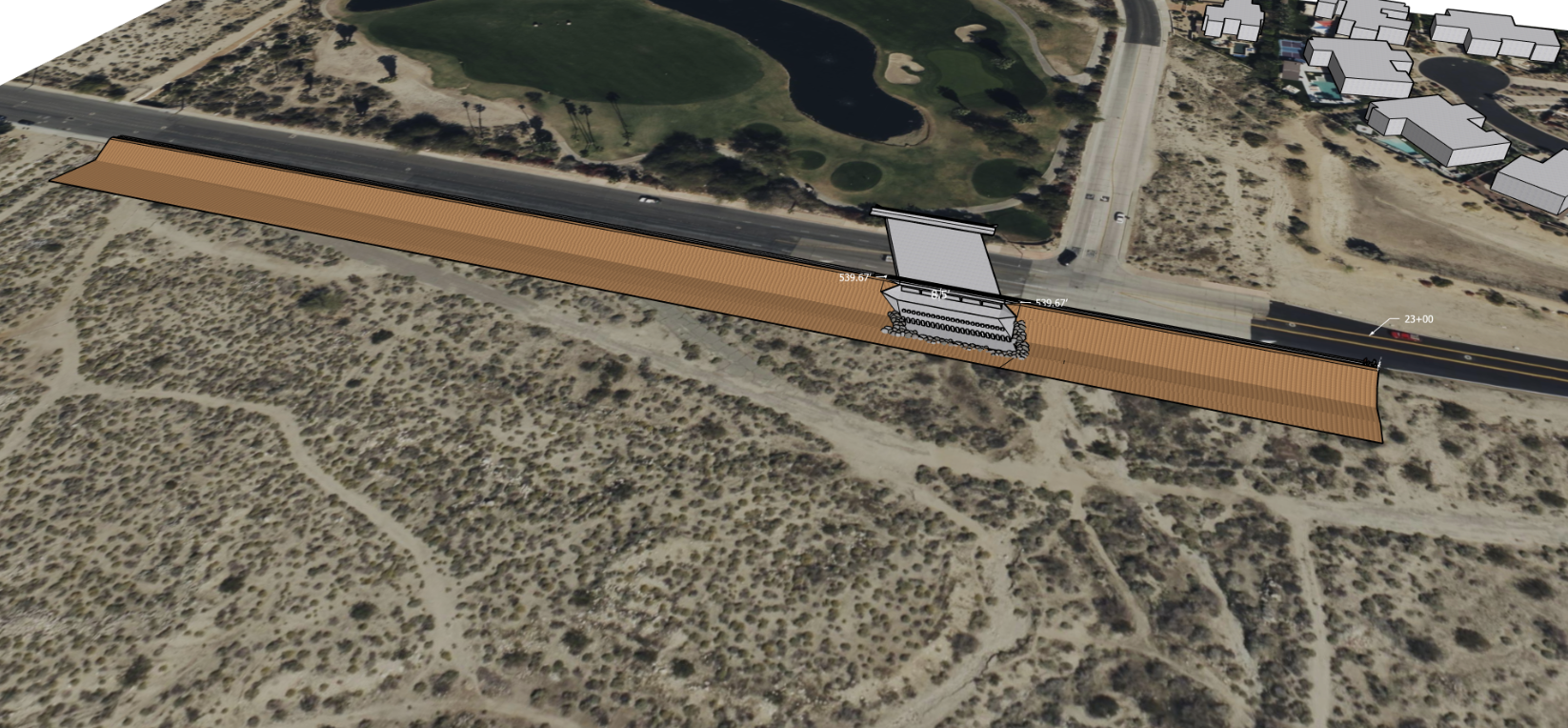
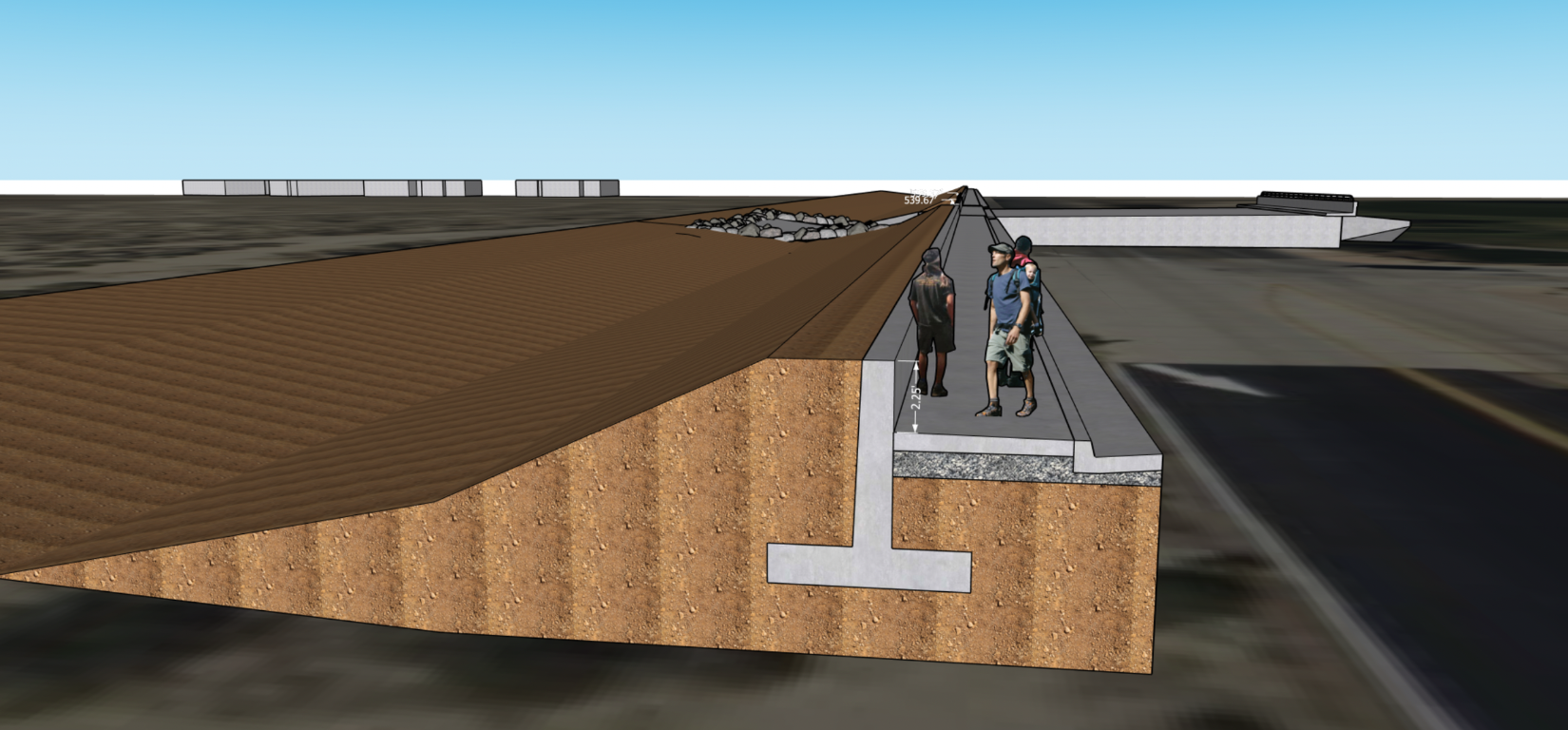
A rendering of the bridge planned for South Palm Canyon Drive near the intersection with East Bogert Trail.
Introduction
South Palm Canyon Drive near East Bogert Trail is the sole roadway serving the southern half of the City of Palm Springs. Over the years, rainwater runoff from Oswit Canyon has flooded the crossing during heavy storms, closing the road and limiting access for residents and emergency responders. The City has pursued a flood‑control bridge and drainage project for nearly two decades to provide reliable access to South Palm Springs residents. This update provides a comprehensive overview of the project’s development, public outreach, alternatives considered, environmental review, City Council directives, funding, and a recently filed legal challenge.
Project Purpose and Location
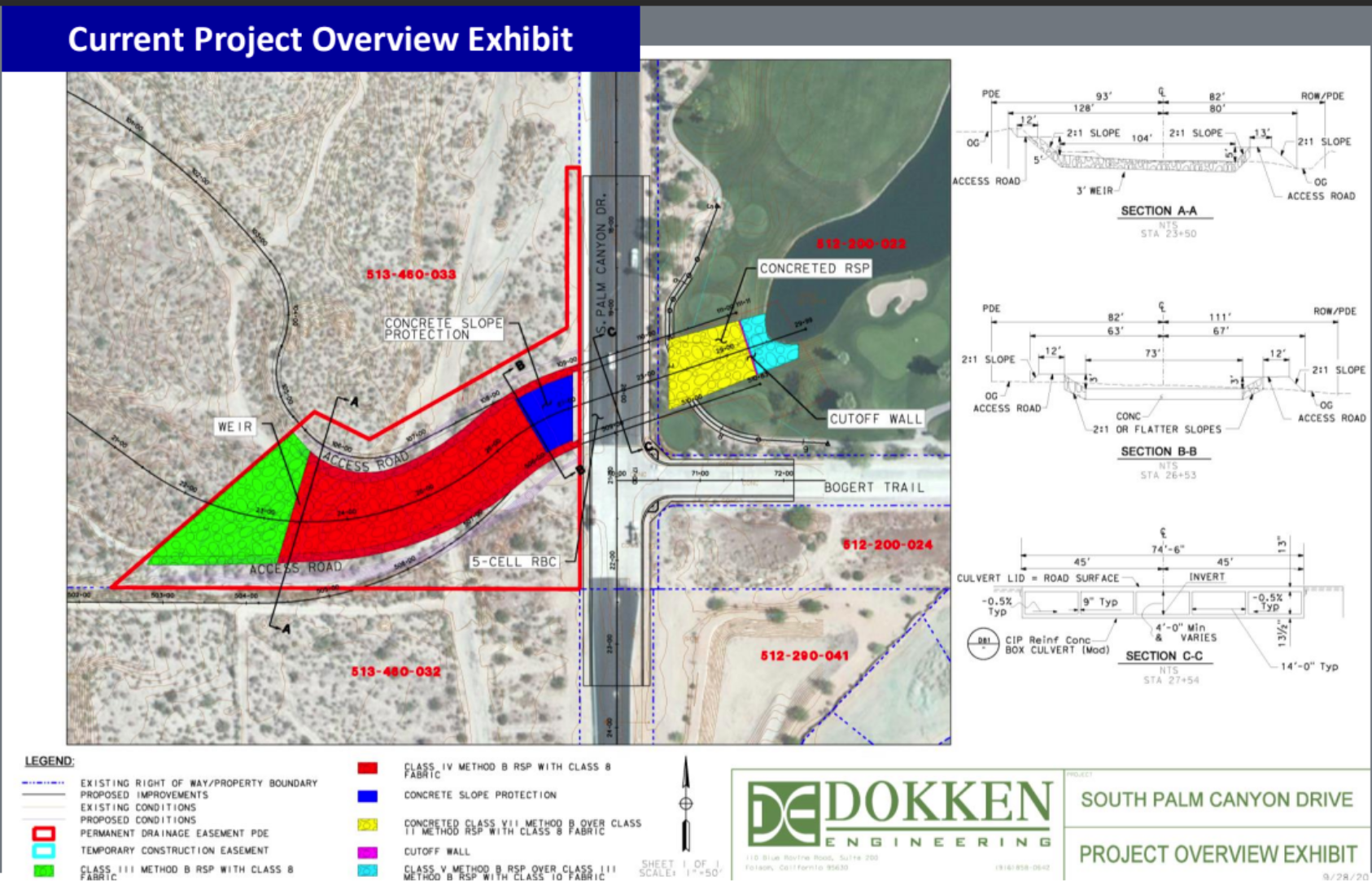
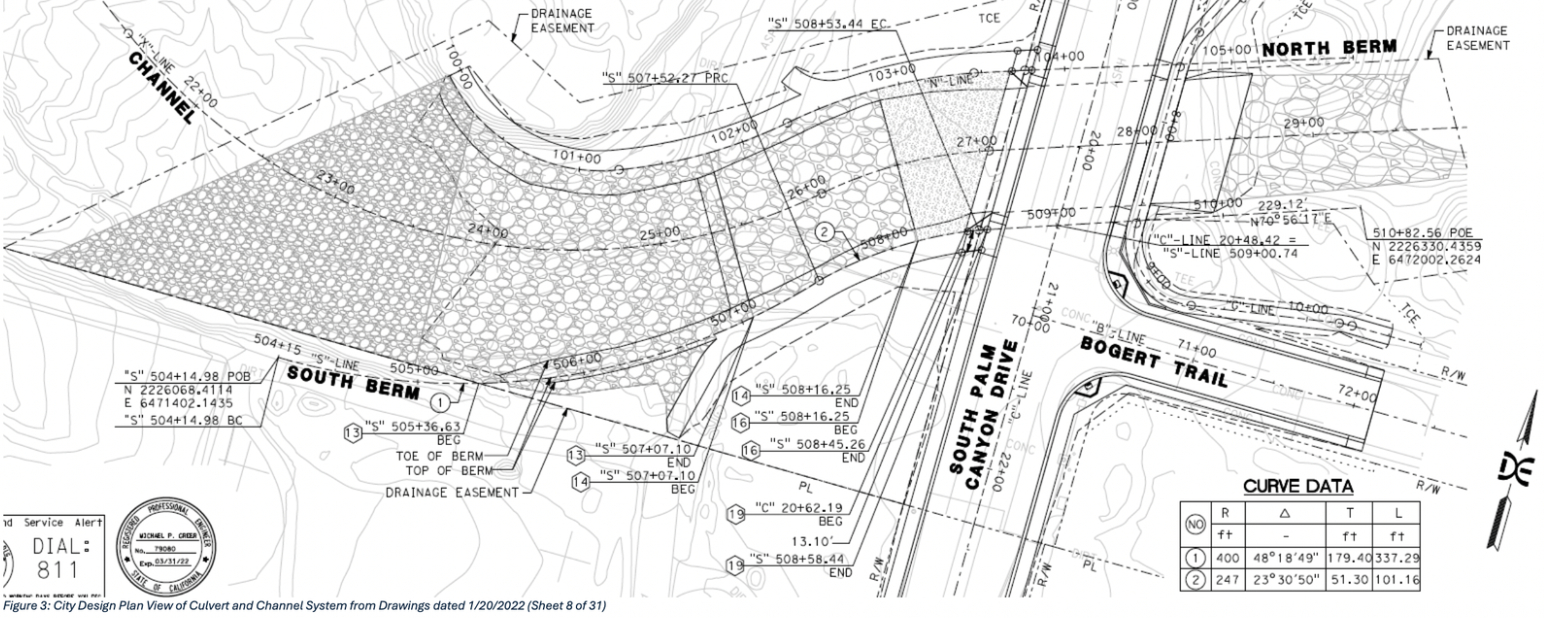
As major weather events have become more intense and common, the City of Palm Springs has initiated several bridge improvements throughout the City boundaries to provide more reliable access. This project would replace the existing low‑water crossing with an elevated roadway and a reinforced drainage system. Storm flows from Oswit Canyon would be conveyed through a channel to a culvert beneath South Palm Canyon Drive, continuing east through the Indian Canyons Golf Resort and ultimately to Palm Canyon Wash. The project would ensure reliable access during major storm events while reducing erosion and deposition at the crossing.
Flood History and Emergency Access Impacts
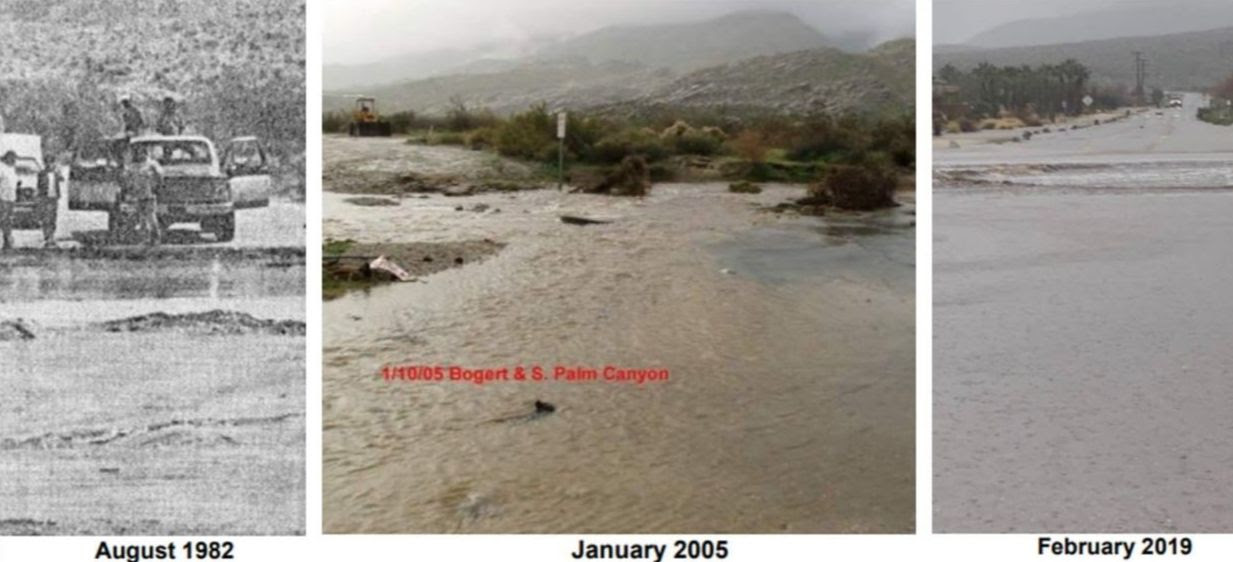
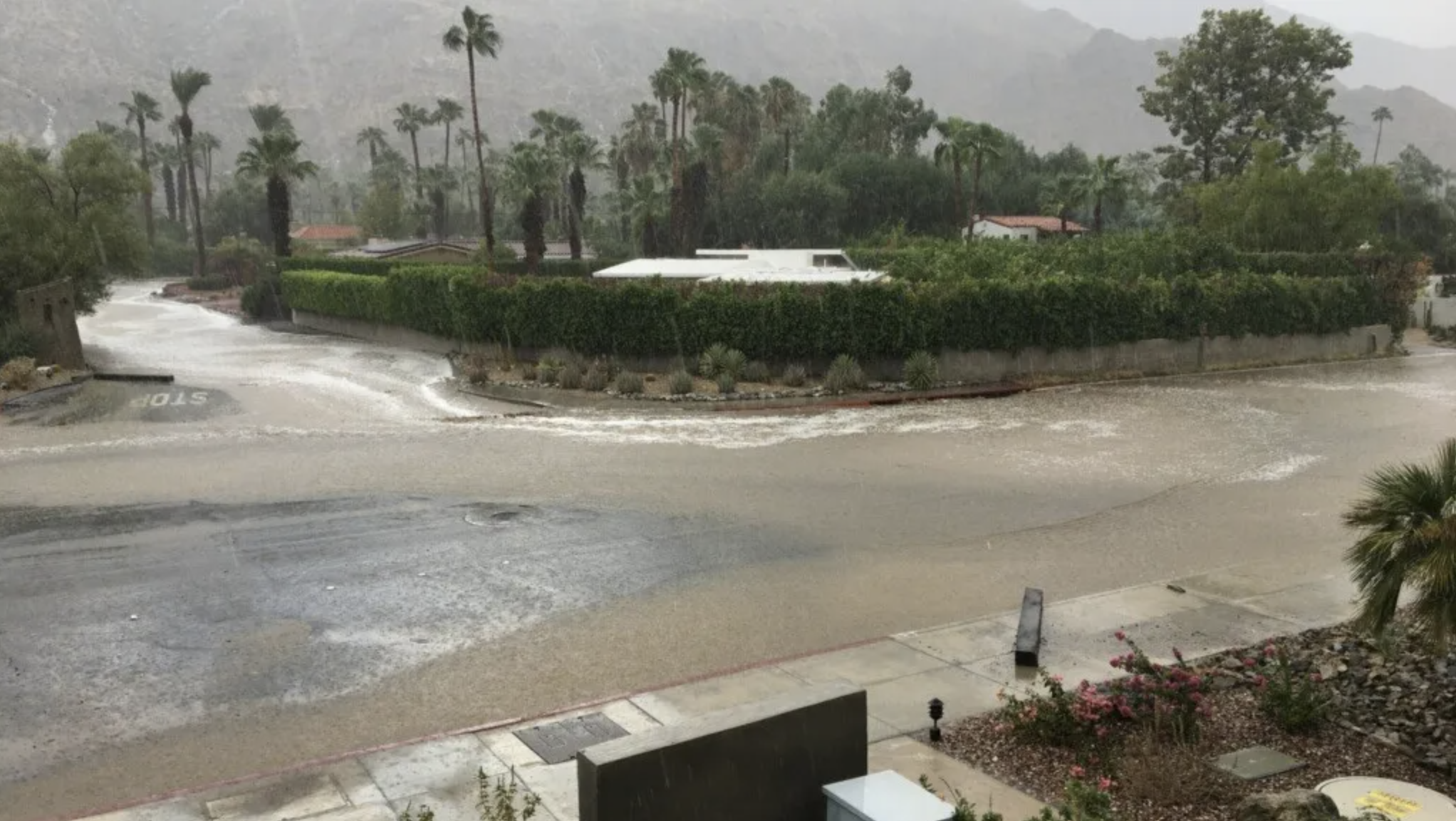
South Palm Canyon Drive has closed multiple times over the past two decades due to floodwaters overtopping the low‑water crossing, most recently in February 2019. These floods required extensive cleanup to remove sediment deposits and standing water before the road could be reopened.
As the only direct roadway serving the Andreas Hills and adjacent neighborhoods, these recurring events pose major challenges for emergency access. Approximately 700 homes rely solely on this route, and according to City data, there were 590 emergency calls from this area in 2024. This neighborhood, in particular, has a demographic that skews slightly older than the rest of Palm Springs, underscoring the importance of reliable emergency access for first responders, including police officers, firefighters, and EMTs.
Hydrology and Watershed Characteristics
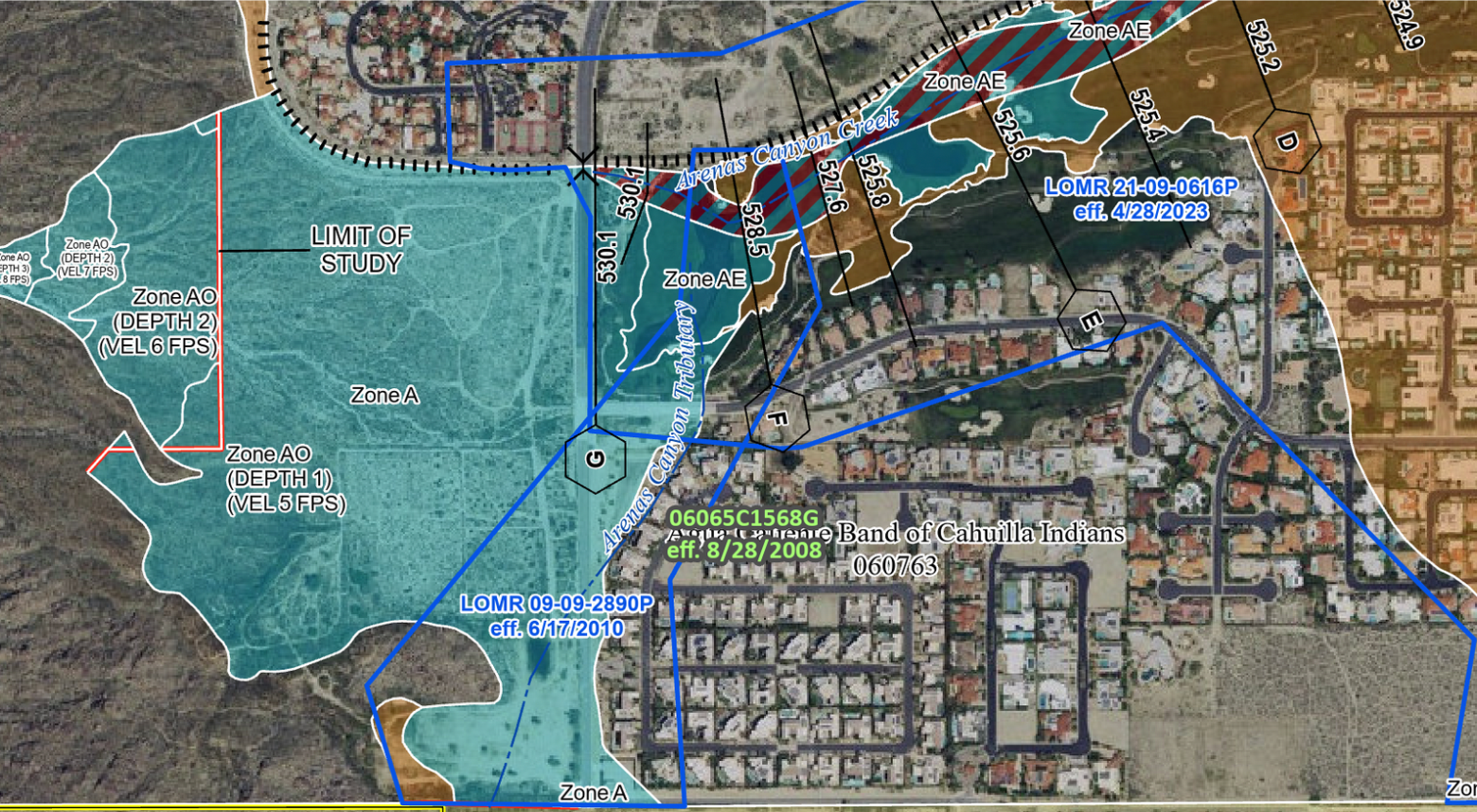
Oswit Canyon drains an alluvial fan of roughly 3.2 square miles. In a 100‑year storm event, the watershed can generate over 1.3 million gallons of runoff per minute — a volume far beyond what small basins, dry wells, or trenches could feasibly retain. As a result, the City's design focuses on conveying water under the crossing and preventing the roadway from being damaged, structurally compromised, or washed away entirely.
Historical Background (2005–2017)
In 2005, the City applied to the Highway Bridge Program (HBP) for federal assistance to construct an elevated roadway and a new culvert system. Caltrans authorized the federally assisted project in 2006, and the City proceeded with geotechnical, hydrologic, cultural, and biological studies. The City contracted Dokken Engineering in 2008 as the environmental and engineering consultants to redevelop South Palm Canyon Drive and the existing low-water crossing.
In January 2012, the City adopted a Mitigated Negative Declaration (MND) under the California Environmental Quality Act (CEQA), which confirmed that the project would not have a significant adverse environmental impact. Caltrans determined the project was exempt from requirements under the National Environmental Policy Act (NEPA) the following month.
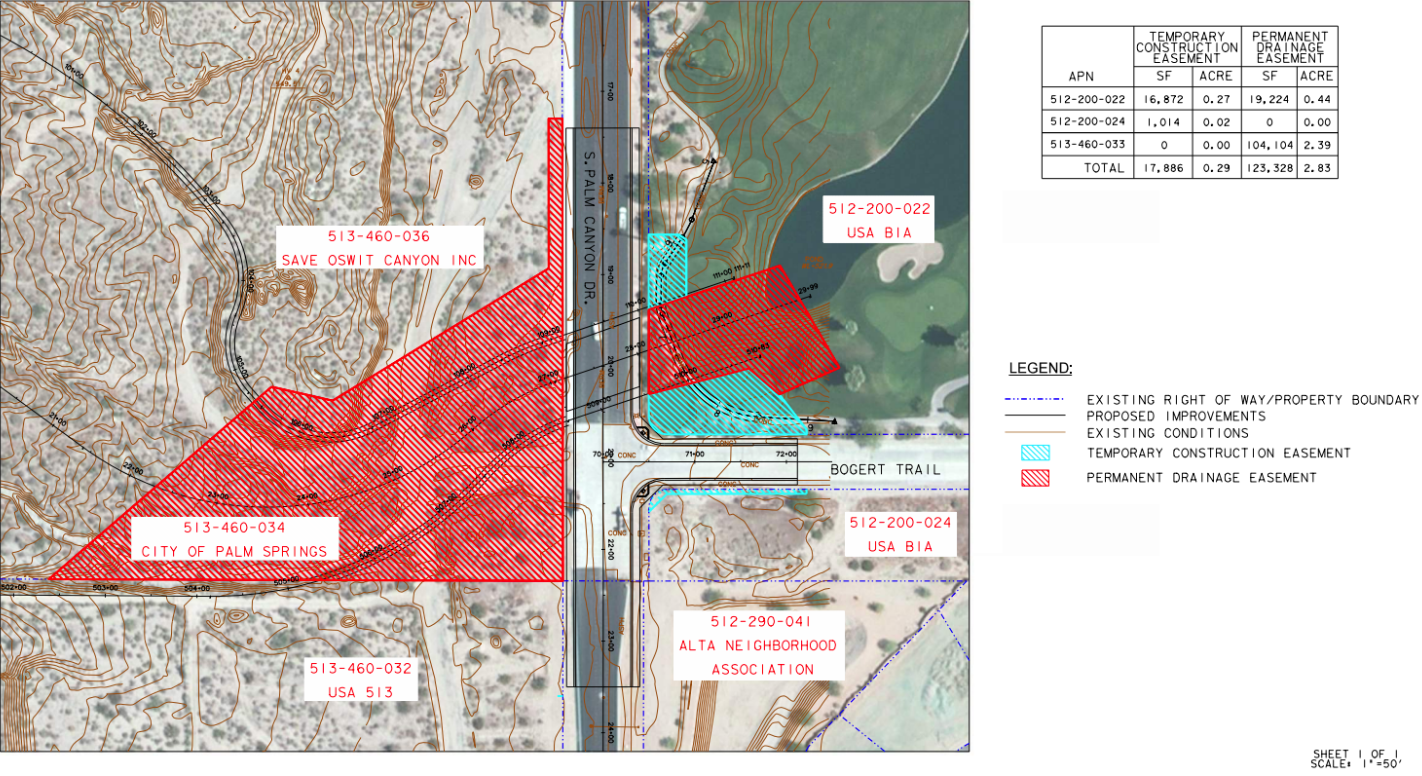
Between 2015 and 2017, the City advanced final design and began acquiring right‑of‑way, including legal access to a portion of what was then privately owned Oswit Canyon property. In early 2017, an initiative to change the property’s zoning led to litigation involving the property owner and temporarily halted the City’s ability to secure legal access for construction.
Settlement and Conservation (2019–2020)
In 2019, the parties pursued a settlement through which the conservation group Oswit Land Trust (OLT), formerly known as the Committee to Save Oswit Canyon, acquired most of the Oswit Canyon property in October 2020 for preservation. The settlement stipulated that the City could acquire the area needed for the flood‑control project while OLT could offer input on the design. Additionally, the settlement requires OLT not to file, fund, or support additional litigation against the project, although they can review and comment on environmental design elements such as the bridge’s footprint, materials, and visual character. The settlement also mandates that OLT must accept the City’s final design decision.
 Click here to read the settlement agreement.
Design Development and Environmental Review (2019–2025)
From 2019 through 2024, City staff and Dokken Engineering evaluated concepts suggested by OLT’s consultants and refined the approved project to reduce its footprint and visual impact. Rock treatments replaced some concrete, and berm heights were reduced to follow site topography. Revegetation was included to blend disturbed areas with the natural surroundings over time.
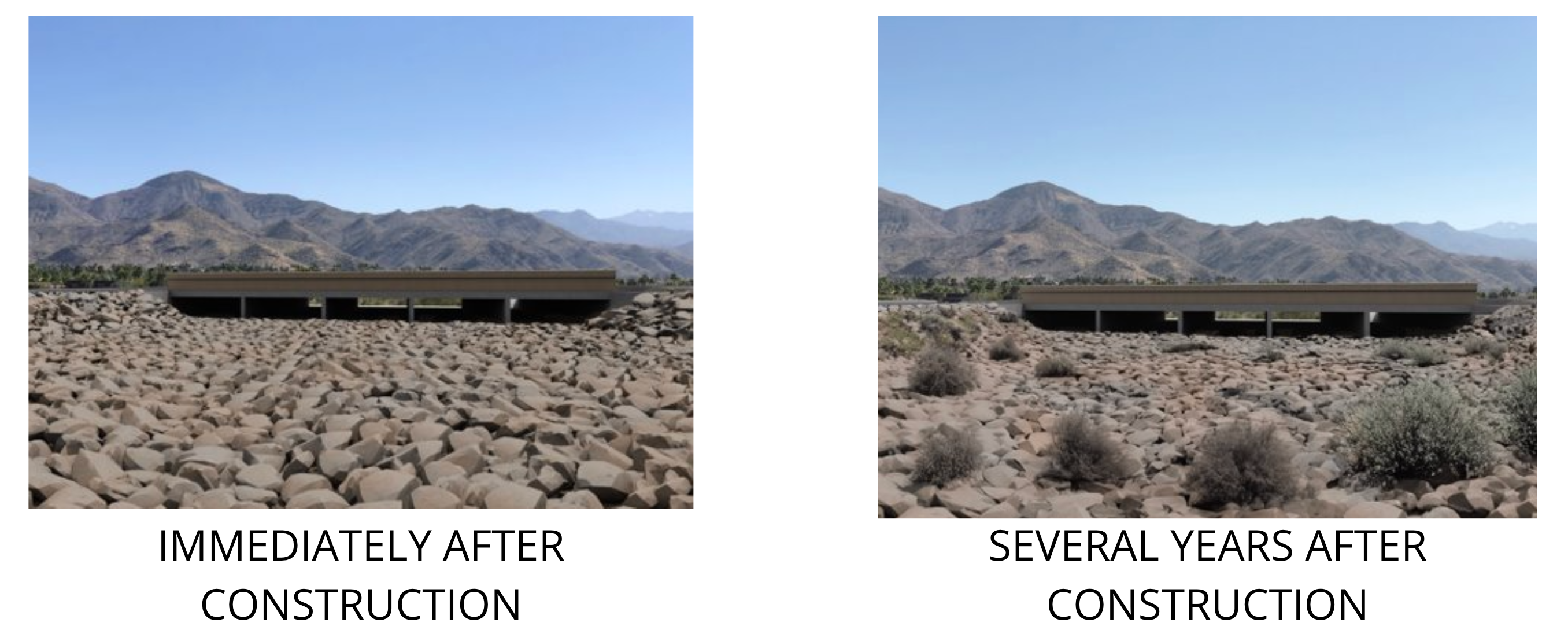
Given the length of time since the original environmental approvals, the City initiated a Supplemental Biological Study and began preparing a CEQA Addendum in 2025. The City continues to coordinate with Caltrans and wildlife agencies. The City Engineer will not finalize plans until final action is taken on the CEQA Addendum, after which the City can advance to advertising for construction bids.
Community Feedback Period (April–June 2025)
On April 9, 2025, the City Council directed staff to postpone a decision regarding approving construction documents and obtaining bid authorization on the project, and seek community feedback for at least 60 days. The City held two community meetings: an in‑person session on May 29 at Indian Canyons Golf Resort and a virtual session on June 2. Each session had roughly 80 attendees. Alongside emails and letters, 46% of overall comments were supportive of the project, 24% neutral/clarifying, and 31% opposed.
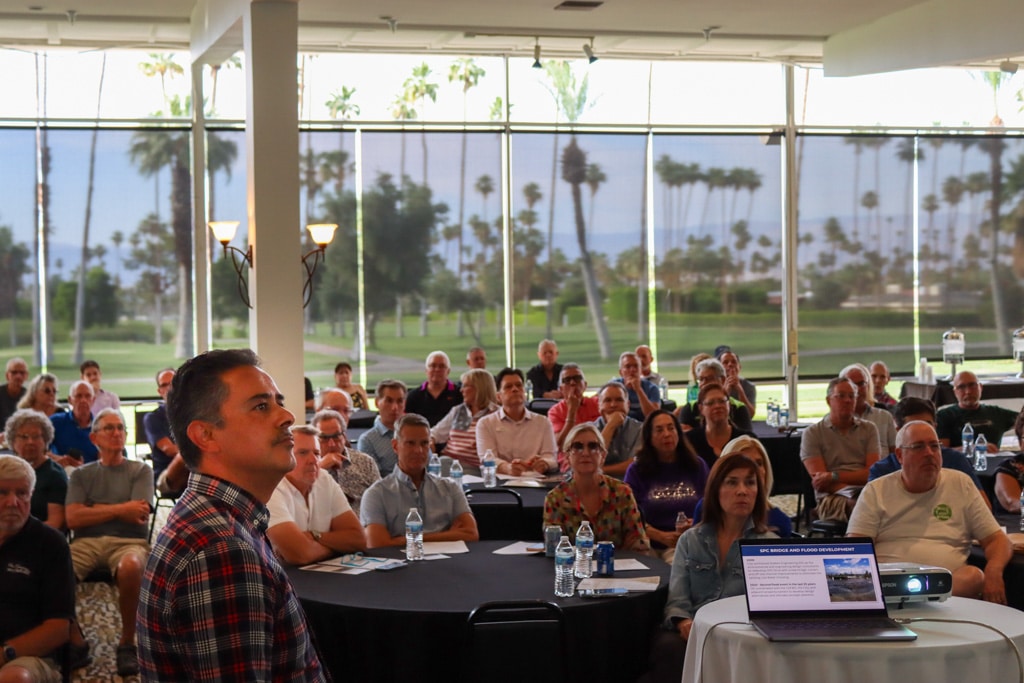
The most frequent themes were public safety and emergency access. Community members also raised environmental considerations, project costs, funding, effectiveness of the design, downstream impacts, project timeline, and construction readiness. Supporters emphasized public safety and the importance of retaining federal funds, while opponents raised questions about environmental effects, cost‑effectiveness, and alternatives. Residents also asked for clear plans for construction staging, traffic detours, Lykken Trail access/parking, and maintenance.
Emergency Services - Context from Recent Years
Local officials and residents highlighted experiences during the 2019 Valentine’s Day storm and Tropical Storm Hilary, when road closures and flooding prevented residents from traveling to safety and emergency services from accessing homes. The Fire Department also emphasized that keeping South Palm Canyon Drive open during major events reduces risk to motorists and preserves response capacity citywide. City officials have also noted a high annual volume of emergency calls originating from the affected neighborhoods, reinforcing the need to ensure dependable access in that area.
OLT’s Alternative and the City’s Technical Evaluation (July 2025)
On July 2, 2025, OLT submitted its fifth design concept that retained the City’s culvert design but replaced the channel with a flood‑wall along South Palm Canyon Drive. Following an expedited technical review and discussions with OLT’s consultant, the City’s engineer and Dokken Engineering identified concerns about:
- Performance and reliability during design storms, including risks of flooding, erosion at the culvert inlet, and sediment management.
- Right‑of‑way and permitting beyond existing drainage easements, potentially affecting tribal lands and areas outside current environmental clearance, which could prompt additional studies, negotiations, and approvals.
- Schedule and funding risks. A redesign could introduce a multi‑year delay, forfeiting $4.5 million from the federal government that must be used by December 2026.
- Uncertain costs and constructability, including the wall’s final configuration and maintenance access.
- Potentially larger footprint disturbances in some locations and blockage of maintenance routes.
City Council Direction on July 21, 2025
After receiving the outreach summary and evaluating OLT’s design, the City Council voted on July 21, 2025, to reject OLT’s latest design alternative and approve City staff’s design. The action directed staff to finalize the CEQA Addendum, complete plans and specifications, and prepare the project for bidding. The Council also affirmed its intent to continue public communications as the project advances.
 Funding, Cost, and Federal Timelines
Roughly half of the project’s cost is covered by the federal Highway Bridge Program, which allocated $4.5 million to the project when the City first secured federal authorization in 2006. However, construction must begin by December 2026, or the funds could expire.
The remaining costs are funded locally through gas tax, Measure A, and special development funds. Because design was delayed during the 2019 lawsuit, the estimated total project cost increased to roughly $9 million due to changing market conditions. After the Addendum is completed and if it is adopted, City staff will finalize plans, evaluate bids, and coordinate with Caltrans on any necessary funding adjustments.
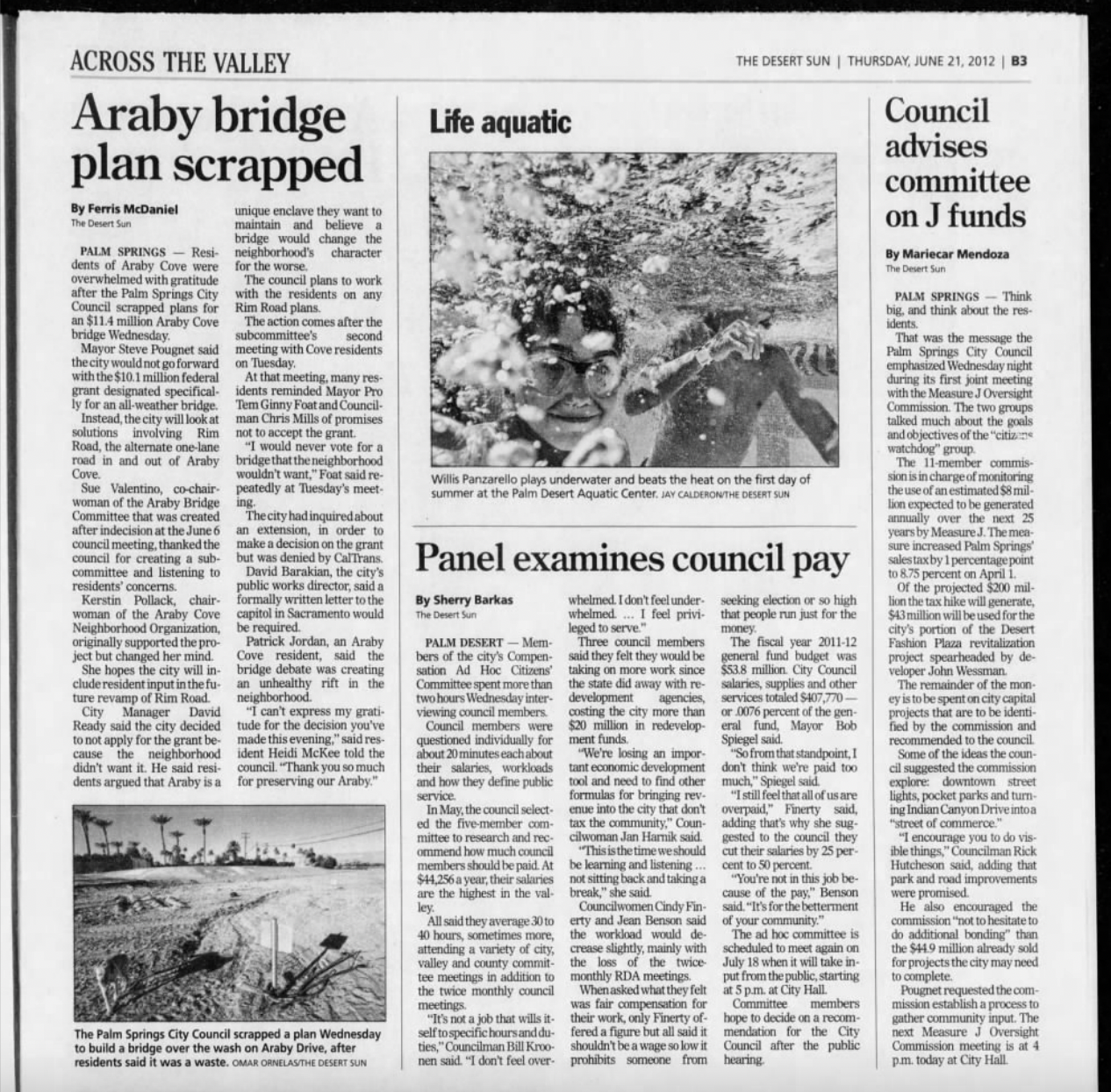
Palm Springs has seen firsthand the consequences when a federally funded project missed its obligation window. In 2012, the City lost federal funding for the Araby Cove bridge after community concerns and delays pushed the project past the deadline. The area subsequently flooded, and the community changed its mind and advocated for the project. However, the funding was never reinstated, and the project was never completed. To avoid repeating that outcome, City staff have emphasized that continued delays on the South Palm Canyon Bridge Project could jeopardize millions of dollars in federal support.
Current Environmental Review and Agency Coordination
The City is preparing a CEQA Addendum to the 2012 MND to document current conditions and address criteria under CEQA for supplemental review. This effort includes a Supplemental Biological Study and coordination with Caltrans and wildlife agencies.
Litigation: Center for Biological Diversity v. City of Palm Springs
On August 20, 2025, the Center for Biological Diversity announced its intent to challenge the City’s July 21 action under CEQA. The lawsuit seeks to set aside the City’s rejection of OLT’s July 2025 design alternative and direction to staff to finalize plans for the project based on claims that the City failed to prepare a legally adequate CEQA document analyzing potential impacts on Oswit Canyon, Peninsular bighorn sheep, Casey’s June Beetle, and other sensitive resources. The petition also seeks to compel the City to consider feasible alternatives and to incorporate all feasible mitigation measures before taking further action to approve or proceed with the project. While that process moves forward in court, the City will continue with CEQA addendum process, which the City began before the Center for Biological Diversity filed its action.
The City’s Next Steps (2026)
- Complete the CEQA Addendum and NEPA coordination, including responses to wildlife‑agency comments.
- Finalize plans, specifications, and estimates; confirm permits and right‑of‑way.
- Publicize construction bids following environmental clearance and coordinate funding with Caltrans Local Assistance.
- Before construction, publish a detailed schedule, detours, and access plan; maintain ongoing resident communications via e‑blasts, meetings, and the City website.
Staying Informed
Residents can continue to follow updates via Engage Palm Springs. Questions may be directed to denise.goolsby@palmspringsca.gov. Staff will share additional materials in future communications as the project moves into environmental completion and bidding.